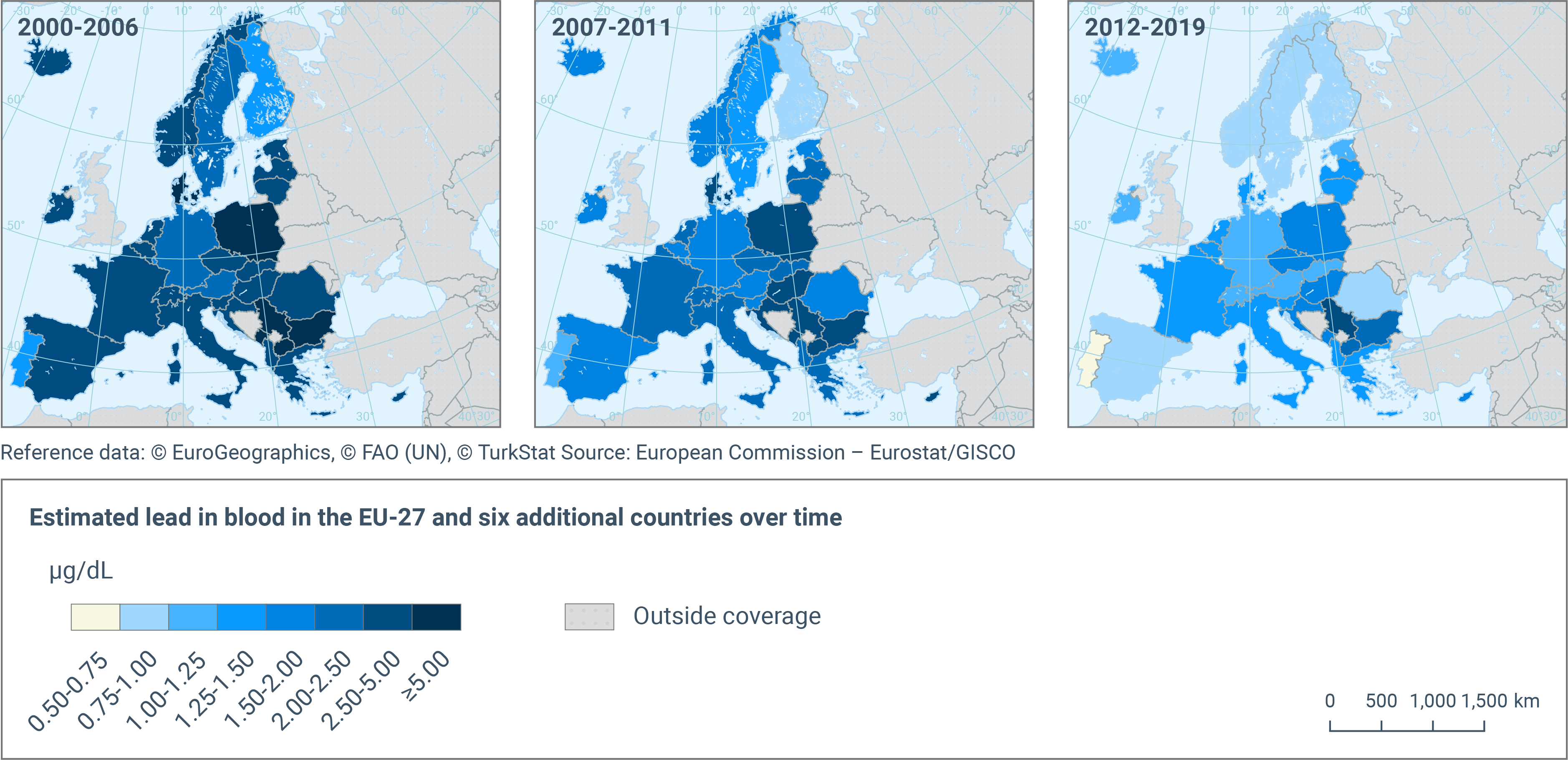
Blood lead levels have fallen by 60% in Europe, but lead exposure still claims lives

Average blood lead levels in Europe have fallen by around 60% since 2000, due to decades of measures to reduce lead pollution. However, between 62,000 and 310,000 premature deaths annually can still be associated with current lead exposure, according to a new European Environment Agency (EEA) briefing. Further action is needed to address remaining and legacy sources of lead.
The new EEA briefing, ‘Lead in Europe — ending a toxic legacy’, shows a substantial decline in exposure over the past two decades. Blood lead levels in the European population are estimated to have fallen by around 60%, between 2000-2006 and 2012-2019. The reduction follows decades of European and national action, including the phase-out of leaded petrol and restrictions on lead in consumer products, toys and other uses.
Despite this progress, lead remains a significant public health concern. No safe level of lead exposure has been identified and harmful effects can occur at the relatively low exposure levels still found in Europe.
Lead is particularly harmful to foetuses, infants and young children, with low-level exposure associated with impaired neurodevelopment, reduced IQ and behavioural and learning problems. In adults, exposure increases the risk of cardiovascular disease, hypertension, kidney damage and adverse reproductive outcomes.
Using a conservative approach, the briefing estimates that lead exposure is linked to more than 62,000 premature deaths and 710,000 years of life lost every year in Europe. A wider estimate, which takes into account evidence that lead can harm health even at lower levels of exposure, puts the toll at more than 310,000 deaths and 3.5 million years of life lost annually.
The health burden is also unevenly distributed. The briefing finds higher estimated lead-related mortality rates in eastern and south-eastern Europe, particularly in Bulgaria, Croatia, Hungary and Romania and parts of the Baltic region, while lower rates are generally found in northern and western Europe. The estimates also carry greater uncertainty in parts of eastern and south-eastern Europe.